
Part 32: A Closer Look at the Empty Tomb

The fact that the tomb was first discovered empty by women is a strong argument in favor of the validity of this story in the Gospels, for according to ancient Judaism, women were not fully reliable witnesses in court. In reporting the initial discovery of the empty tomb by women, therefore, the evangelists were recording an historical embarrassment — certainly not the kind of thing they would have fabricated themselves if they were just writing fictional propaganda.
Part 32: A Closer Look at the Empty Tomb
By Robert Stackpole, STD
In this weekly web series, Dr. Robert Stackpole, emeritus director of the John Paul II Institute of Divine Mercy, leads us step-by-step through the life of the Founder of Christianity, from Bethlehem to Galilee to Jerusalem. Along the way, we pause to consider in-depth the historical debate over the gospel stories of the virginal conception and nativity of Jesus, his message of the Kingdom, his embrace of persecution and death on the Cross, and his glorious bodily resurrection from the dead. Finally, we plunge into the great mystery of the Incarnation, and show how it actually shines through the whole gospel story from beginning to end. Read the series from the beginning.
As we have seen, the Apostles and Evangelists put greatest emphasis on their witness to encounters with the risen Lord — for obvious reasons (an empty tomb, all by itself, does not prove that Jesus rose from the dead). On the other hand, they were careful to record the discovery of the empty tomb on Easter morning as well. For only if that tomb was empty, and the Body of Jesus truly and inexplicably gon,e could their testimony about seeing him alive after his death carry any weight.
We have already considered, in previous installments in this web series, St. Paul’s witness to the empty tomb and the Resurrection of Jesus in I Corinthians 15 (the earliest written historical testimony about these events). For the empty tomb in particular, however, there is plenty of solid historical evidence on hand beyond what St. Paul implied in his first epistle to the Corinthians.
Solid historical fact
To begin with, that Jesus was laid in an easily identifiable grave by Joseph of Arimathea is a solid historical fact, reported by all four Gospels, and disputed by no one at the time. Gary Habermas adds:
Joseph of Arimathea and Nicodemus were not exactly household names in the early church to mention in these burial accounts unless they were the fellows who actually buried Jesus. Why dredge up these names out of obscurity if so little mileage is gained from the exercise, especially if they weren’t really the people anyway? It makes more sense that they were actually the ones who performed the burial process. [1]
It is also highly unlikely that this act of benevolence by Joseph of Arimathea, a Jewish aristocrat and member of the Sanhedrin, would have been invented by Christian apologists, given their hostility to the early Jewish leaders of the Sanhedrin who had unjustly condemned the Savior of the world to death. Besides, the Gospel writers had to be very sure that Joseph of Arimathea and Nicodemus had done such a thing, since the claim could easily have been refuted by the Temple establishment in Jerusalem if it was not true.
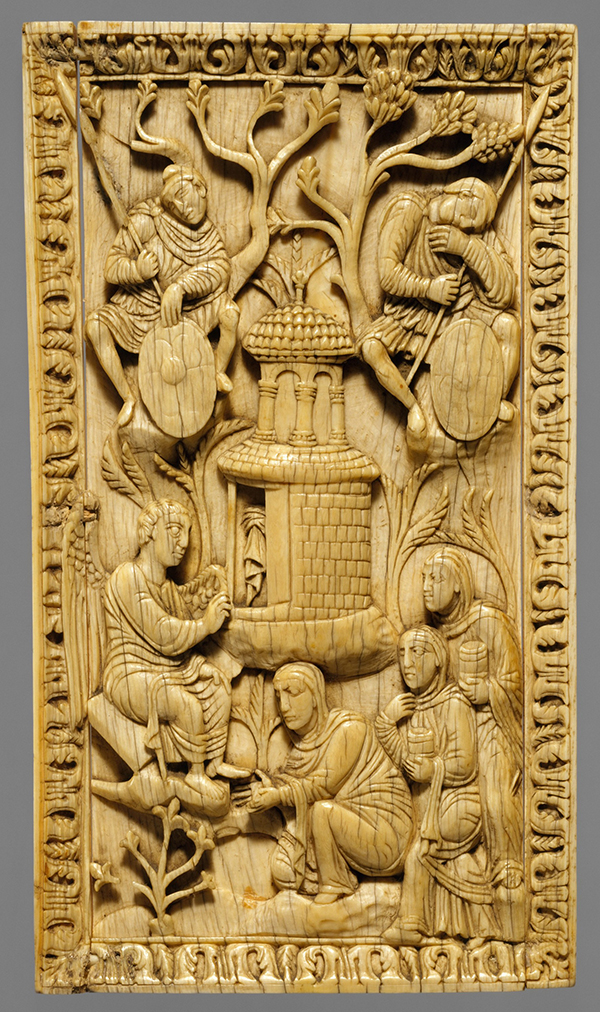
"Wrong' tomb?
This also strikes a blow against the “Wrong Tomb” theory: the theory that the women and the disciples were confused about where Jesus was actually buried and went to the wrong tomb on Easter morning. Chris Price explains:
Joseph, it is important to remember, was a prominent, well-known man, so his tomb would have been extremely easy to locate by people in Jerusalem, making it impossible that the disciples, women, or enemies for that matter, could have repeatedly gone to the wrong tomb by mistake. In fact, the tomb, as described in the Gospels, is that of a rich man and these types of burial sites were not exceedingly numerous in Jerusalem, again making it simple to find the tomb and look into the strange events and odd claims made by the disciples. [2]
The “Wrong Tomb” theory runs aground on this point alone, but there is plenty of other evidence against it as well. As John Stott tells us:
[T]here is the theory that the women went to the wrong tomb. It was still dark, and they were dazed with sorrow. They could easily, it is claimed, have made a mistake.
This sounds plausible on the surface, but it hardly bears examination. To begin with, it cannot have been completely dark. It is true that John says the women came “while it was still dark.” But in Matthew 28:1 it is “toward the dawn,” while Luke says it was “at early dawn,” and Mark distinctly says that “the sun had risen.”
Further, these women were no fools, At least two of them had seen for themselves where Joseph and Nicodemus had laid the body. They had even watched the whole process of burial, “sitting opposite the sepulchre.” The same two … returned at dawn, bringing with them Salome, Joanna, and the “other women,” so that if one mistook the path or tomb, she is likely to have been corrected by the others. [3]
Historical embarrassment
Actually, the fact that the tomb was first discovered empty by women is a strong argument in favor of the validity of this story in the Gospels, for according to ancient Judaism, women were not fully reliable witnesses in court. In reporting the initial discovery of the empty tomb by women, therefore, the evangelists were recording an historical embarrassment — certainly not the kind of thing they would have fabricated themselves if they were just writing fictional propaganda.
Most importantly, if the tomb was not actually empty, then the Jewish or Roman authorities surely would have produced the body to crush the rumor that Jesus had risen from the dead. In fact, none of the early Jewish polemical sources denies that the tomb of Jesus was easily recognizable, and completely empty on Easter morning. Their claim that the disciples stole the body and invented the lie that Jesus had risen actually presupposes that even the enemies of Jesus believed in the empty tomb (Mt 28:11-15).
In fact, according to early Christian writers St. Justin Martyr (Dialogue with Trypho, 108), and Tertullian (On Spectacles, 30), Jewish authors continued to make the claim that the disciples stole the body from the tomb right up to the end of the 2nd century.
Next: Part 33: More Questions about The Empty Tomb.
Previous article.
Notes
[1] Gary R. Habermas, Evidence for the Historical Jesus (Cambridge, Ohio: Christian Publishing House, 2020), p. 86.
[2] Chris Price, Radical Hope: Resurrection Hope in a Hurting World (Create Space, 2016), p. 35.
[3] John Stott, Basic Christianity (Downer’s Grove: IVP, 2006 edition), p. 60.
{shopmercy-ad}
You might also like...
What is the connection between Pope Leo XIV and one of the great holy wonder-workers or miracle workers in the history of our faith, St. Nicholas of Tolentino? He was was an Augustinian friar (like Pope Leo) and considered the patron of the Holy Souls in Purgatory.
On the feast day of St. James, Apostle, July 25, we share another example of how Jesus keeps His promises.
In the early 19th century, high in the mountains of Lebanon, Youssef Makhlouf dreamed of giving his life to Christ in a radical way. He became St. Charbel Makhlouf, OLM, whose feast we celebrate on July 24.