
















By Chris Sparks
[September] 29. On the Feast of Saint Michael the Archangel, I saw by my side that great Leader, who spoke these words to me: “The Lord has ordered me to take special care of you. Know that you are hated by evil; but do not fear — ‘Who is like God!’ ” And he disappeared. But I feel his presence and assistance. (Diary of Saint Maria Faustina Kowalska, 706)
The Lord of the Rings is one of my favorite fantasy series. J.R.R. Tolkien’s masterpiece tells the fictionalized history of a portion of our world, when elves, hobbits, and more lived and died under the threat of the return of a fallen spirit to exert dominion over the world.
It’s fun to read or watch. It’s also one of the greatest examples of many of the truths of our Catholic Christian faith I’ve ever encountered.
Take, for example, the two key wizards in the series, Saruman the White and Gandalf the Gray. At the beginning of the series, Saruman is the leader of the White Council, a collection of incredibly powerful beings dedicated to protecting the world from the Dark Lord Sauron and his creatures. But that doesn’t last. You see, Saruman had locked himself away in the great tower of Orthanc, where he assiduously and continually studied the works of the enemy. He even found an ancient “seeing stone” called a palantir (or, translated into modern English, a “television”) that he used for surveillance of the machinations of evil.
And one day, using the palantir, he encountered the enemy himself.
Saruman initially resisted, but eventually, the enemy showed Saruman whatever he wanted Saruman to see: a more and more terrible vision of the powers of the forces of evil; a more and more despairing vision of the powers of good. Saruman fell out of pride, believing that the only wise course of action was to support Sauron in his conquest, intending someday to guide and restrict the evils that Sauron and his forces would do. And, at the back of Saruman’s mind, there was the hope that one day, he himself might seize power from Sauron. Anything in the name of the triumph of good, including helping the triumph of evil, after all!
Contrast this fall and corruption with Gandalf the Gray, who proved the wiser of the two wizards. Gandalf was a wanderer, a stranger in a strange land in Middle Earth. He never settled, never walled himself about with a false sense of security, nor even the real security the full use of his powers might have been able to provide. No — he exposed himself again and again to danger, often coming to warn just ahead of an oncoming storm of violence, evil, or hatred, summoning the free peoples of Middle Earth to resist evil, to choose good, to defend the innocent and the helpless.
Gandalf only ever studied the works of the enemy in order to fight the enemy. For the rest of his days, he spent time with friends and allies. He traveled, seeing the beauties of the world that he fought to defend and loving it, even though it wasn’t his own. He enjoyed the good things, the foods and entertainments of common folk and lordly folk alike. At home in a camp in the wilderness just as much as in the greatest dining halls of the kings, Gandalf would suffer and die, giving himself utterly in the service of good — and then was raised from the dead and restored to the world to oversee the defeat of Sauron.
Saruman and Gandalf, taken together, are a warning about how to approach the spiritual combat. Beware the fascination of evil. Beware the temptation to believe that if only I study the words of demons, the transcripts of exorcisms, the cults and occult secrets and every conspiracy theory chasing around the internet, I will somehow at the end of it be ready to fight the devil, his works, and his pomps.
No!
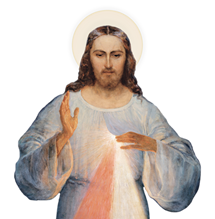
Remember that we are called by our Catholic faith to the contemplation of God. That means we must prioritize the contemplation of truth, of beauty, goodness, being, and love. “Finally, brothers, whatever is true, whatever is honorable, whatever is just, whatever is pure, whatever is lovely, whatever is gracious, if there is any excellence and if there is anything worthy of praise, think about these things” (Phil 4:8). We must prioritize the contemplation of God. Jesus is the Light of the World (rather literally, especially when we look at the Divine Mercy Image). His light will illuminate every dark place and expose every work of the enemy that needs to be exposed. We don’t need to study the darkness in order to see through it. We need to bring Jesus in, for through Him, “the light shines in the darkness, and the darkness has not overcome it” (Jn 1:5). We need to pray, and to let the Holy Spirit be our guide.
Let light in, and it will dispel the darkness.
Let God in, and He will displace the devil.
Bring in truth, and it will disperse lies.
The heart of the Divine Mercy spirituality is in the signature on the Divine Mercy Image: “Jesus, I trust in You,” He who is the Way, the Truth, and the Life, the Light of the World, the Divine Mercy Incarnate. God is infinitely greater than evil, for evil is a mere privation of the good as darkness is the privation of light. Evil can’t and won’t ultimately win.
So no fight with the enemy is so urgent that we need to abandon all caution and dive headlong into study of his conspiracies, or spend all our time seeking to penetrate by earnest study the illusions and lies of his ways. We don’t fight evil by contemplating evil, but rather by contemplating the good and doing works of mercy. Spend time with God and His good gifts, not with the forces of hell, even if, like Saruman, you know you are called to fight them. We must learn the lesson of Gandalf in order to avoid the fall of Saruman: You are what you contemplate, what you devote time to thinking about and encountering, studying, gazing at.
The fundamental law of a Christian is love of God and therefore love of neighbor, not hatred of the devil and his angels. So love God and neighbor. Study the truth. Proclaim the Gospel out of love. Do the works of mercy. And fear only God, not the devil and his forces.
What does that look like in practice? Well, we need to go deeper into the Scriptures, into our Catholic Tradition, into the teachings of the Magisterium. We need to spend time with the Eucharistic Lord in Adoration, the Blessed Mother with her Rosary and other devotions, with the saints in their writings, their relics, and their heavenly intercession. We need to spend our time studying true history and solid, proven science, using our human reason in the study of creation, the work of God’s hands. We need to immerse ourselves in beauty, both the work of human hands and the work of God's hands. We need to spend time with beloved and loving family, friends, and neighbors.
We must give thought to our fellow human beings and their needs, for our fellow human beings are good by nature, and are to be loved as God loves them. And ask for help from Heaven. Saint Faustina takes an active interest in the lives and works of all those who spread the Divine Mercy message and devotion — ask for her help! Saint John Paul II is a powerful intercessor — invite his help! The Mother of God is the greatest intercessor of all, and St. Joseph after her — reach out to Mary and Joseph, especially through powerful devotions like total consecration, the Rosary, and the Memorare.
Pray for me, that I may practice what I preach. I’ll pray for you.
Chris Sparks serves as senior book editor for the Marian Fathers. He is the author of the Marian Press book How Can You Still Be Catholic? 50 Answers to a Good Question.
{shopmercy-ad}
